
Benefits of sourdough
- lower glycemic index and doesn’t spike blood sugar
- fermentation ezymes break down phytic acid which helps improve digestibility
- enhances gut health due to fermentation process
- longer shelf life without added preservatives because it contains naturally occurring acetic acid which prevents mold and fungal growth
- increases mineral availability and absorption
Importance of developing gluten in dough
The more the gluten is developed (through kneading of the dough), the better the dough rises and the more structure the bread will have. When gluten isn’t properly developed, the bread becomes dense and tough. The windowpane test helps to determine if the dough has been kneaded sufficiently by stretching a small piece into a square to be thin enough to see light through it without ripping.
Ingredients
4 cups all purpose flour
1 ¼ cups warm water
½ cup active sourdough starter
1 Tbsp cane sugar or honey
2 Tbsp olive oil
2 tsp salt
Directions
Combine all ingredients into a stand mixer with dough hook attachment. Allow dough to knead for around 10 minutes. Dough should be soft, stretchy, and pass the windowpane test (see pic below).
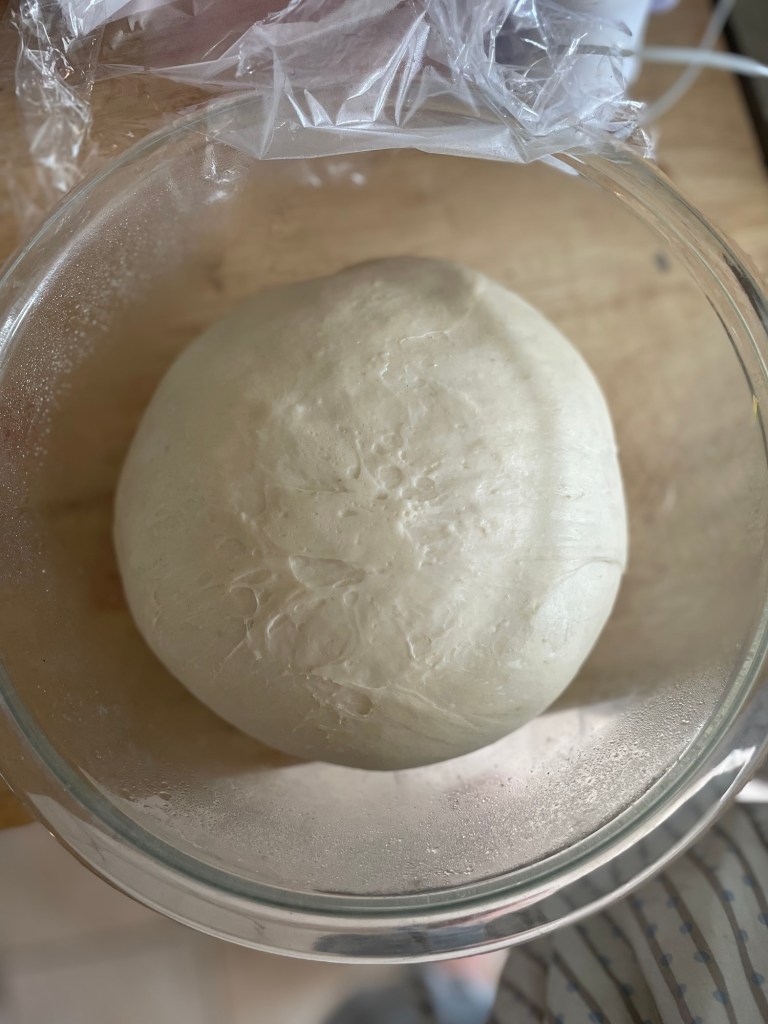

Allow to rise 6-10 hours, or until dough has doubled.
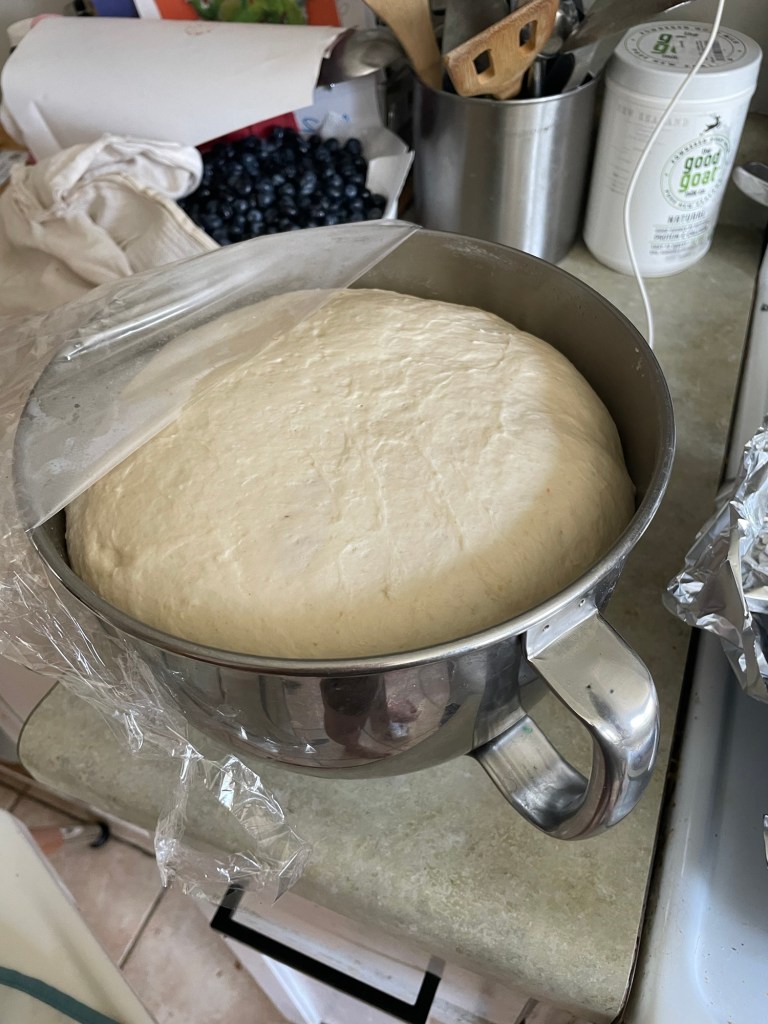
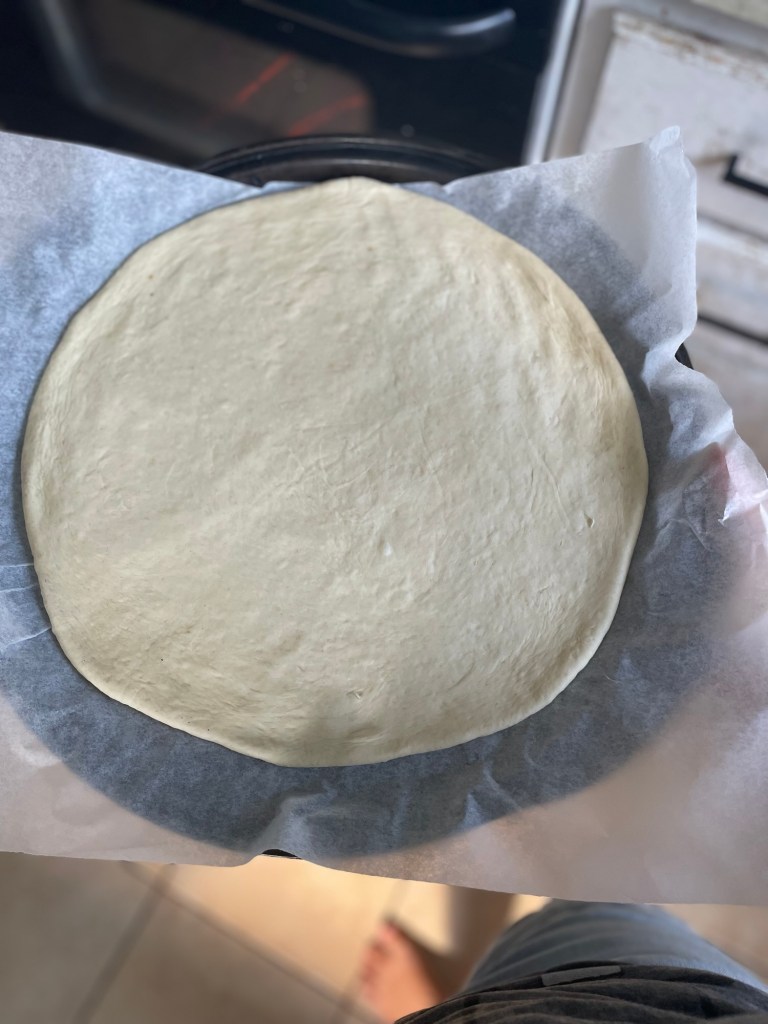
After doubling, roll half of the dough out on parchment paper to the thickness of your preference. Place parchment with dough onto a pizza stone. Repeat with the other half. It will make about 2 large pizzas.
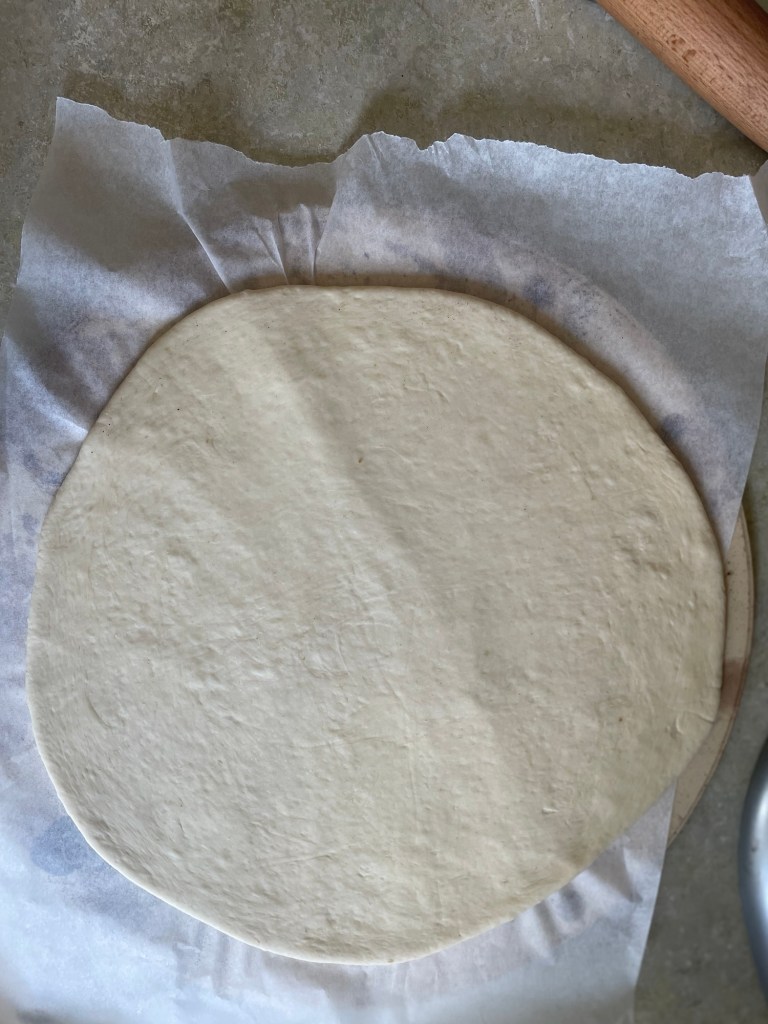
Add toppings!
Bake at 425 degrees for 15-25 minutes depending on crust thickness.

 nourished-hippie.com
Leave a comment