
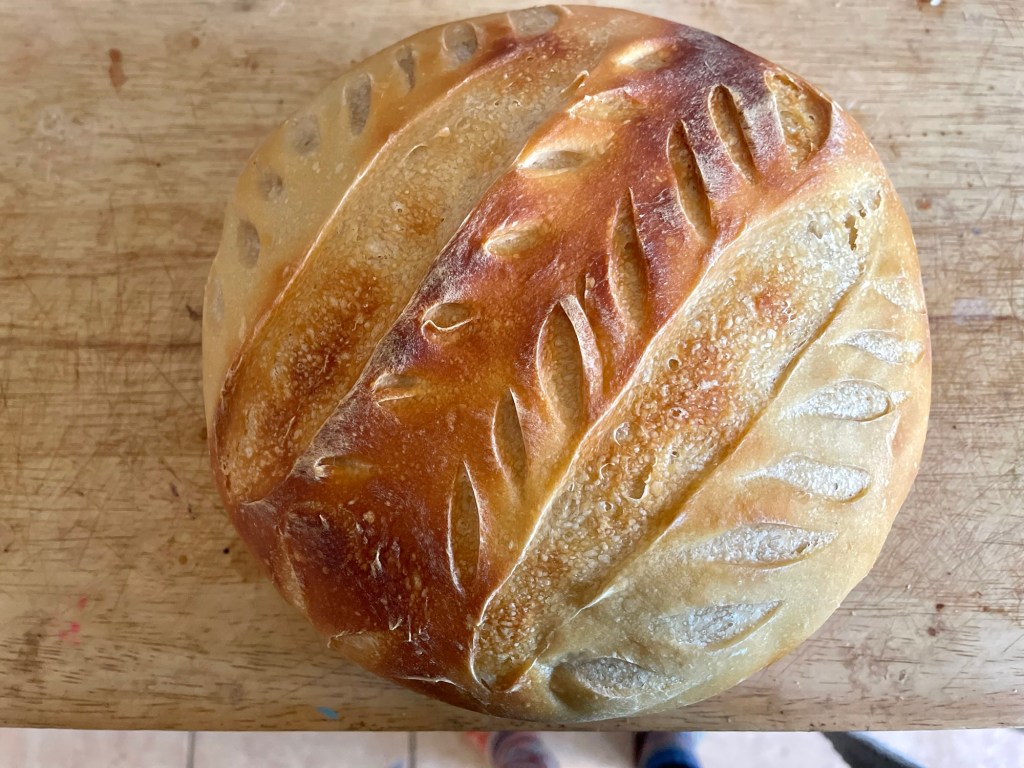
This loaf is exactly what you picture when you think of the classic sourdough bread! Crispy crust with a soft, chewy and tangy crumb inside.
Benefits of sourdough
- lower glycemic index and doesn’t spike blood sugar
- fermentation ezymes break down phytic acid which helps improve digestibility
- enhances gut health due to fermentation process
- longer shelf life without added preservatives because it contains naturally occurring acetic acid which prevents mold and fungal growth
- increases mineral availability and absorption
*Importance of Developing the Dough*
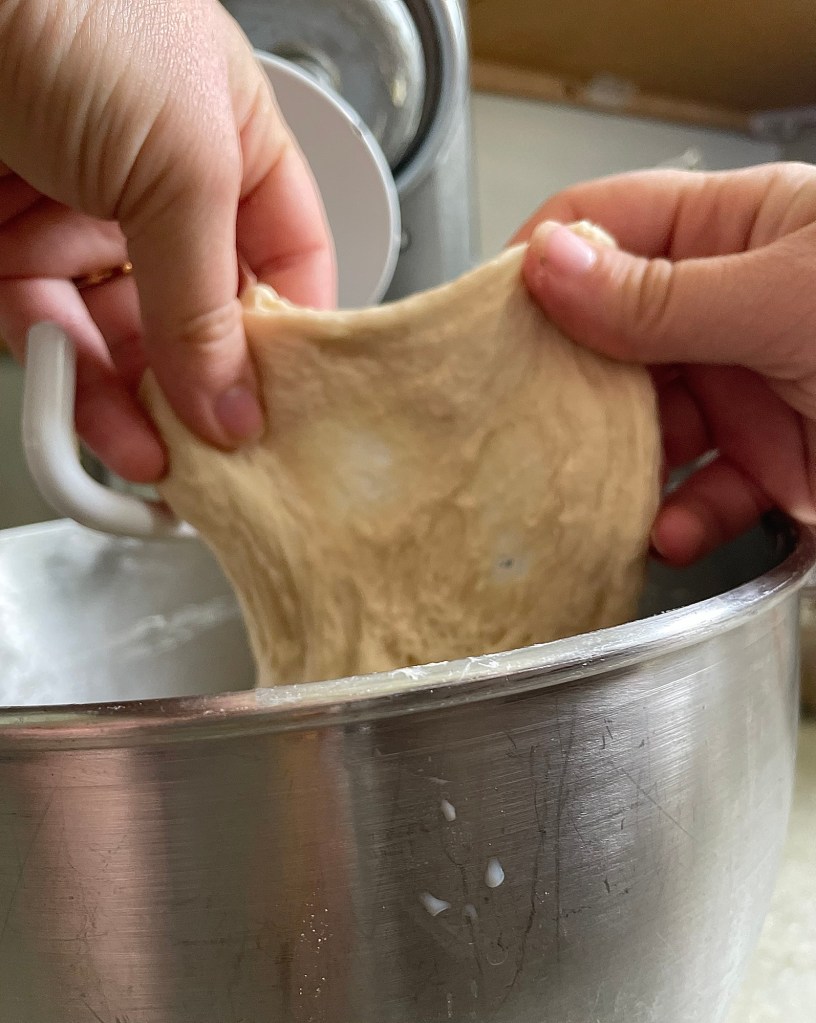
The more the gluten is developed (through kneading of the dough), the better the dough rises and the more structure the bread will have. When gluten isn’t properly developed, the bread becomes dense and tough. The windowpane test helps to determine if the dough has been kneaded sufficiently by stretching a small piece into a square to be thin enough to see light through it without ripping.
Tips
- A stand mixer makes the process much simpler, but you can use your hands to knead this recipe.
- Do not over ferment the dough, or the baked result will be more flat with a less desirable texture.
- The time it takes your dough to rise will depend on the temperature of your home.
- I try to feed my active starter 6-12hr before beginning a recipe.
- You can do stretch and folds every 4 hours if you’d like, but I find it unnecessary for a beginner loaf
Ingredients:
4 cups all purpose flour
1 cup bubbly, active sourdough starter
1 – 1 ¼ cup warm water (start with 1)
½ Tbsp salt
Combine ingredients in order into a stand mixer using a dough hook attachment. Let the mixer work the dough on low speed for about 10minutes. The dough should feel smooth and be developed enough to pass the windowpane test (see above).
Place the dough into a bowl, cover the top of the bowl with plastic wrap, and then cover that with a tea towel. Allow the dough to rise until it has doubled – about 8-12hrs for best results.
After rising, punch the dough down, scrape it from the sides of the bowl, and form it into preferred round shape on your countertop. Place the dough into sourdough basket or shallow bowl and cover again for an hour. While the dough is rising, place a dutch oven (without the lid) into a cold oven and preheat it to 500 degrees.
After an hour, uncover the bowl and flip the dough onto a large piece of parchment paper. Use a blade or knife to cut a design into the dough (if not, it will naturally make it’s own crack in the top as you bake).
Place the dough and parchment paper into the hot dutch oven and cover. Lower oven temperature to 450 degrees and bake with the lid on for 25-30 minutes. Remove lid and bake for another 20-25 minutes, until the top is crispy and golden brown.
Immediately remove from dutch oven after baking and allow to cool before slicing.
 nourished-hippie.com
Leave a comment